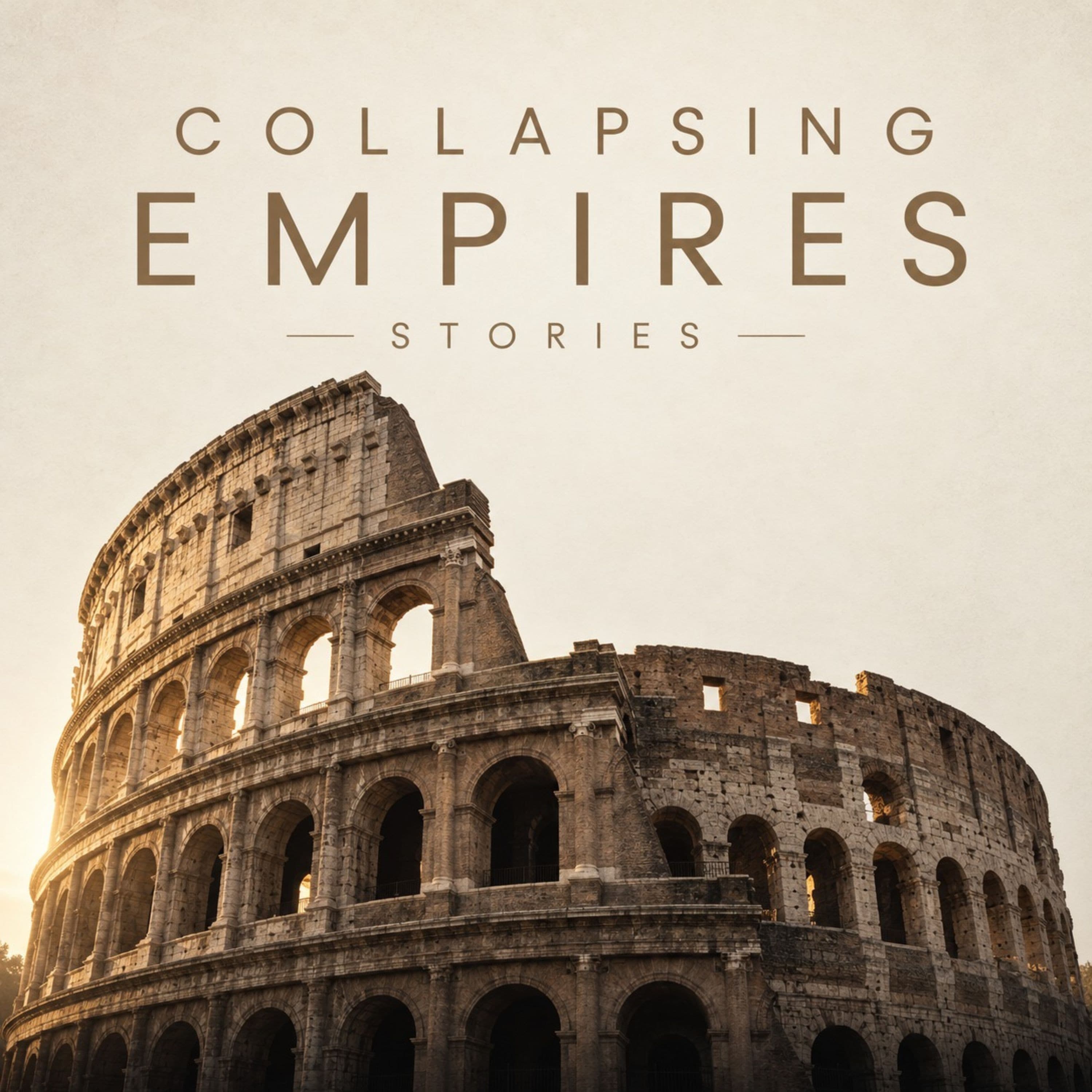
Unveiling the Slow Collapse: Why 'Collapsing Empires Stories' is Your Next Historical Obsession
In a world often obsessed with immediate outcomes and dramatic headlines, there's a profound satisfaction in understanding the deeper currents that shape history. And that, my friends, is precisely where Collapsing Empires Stories truly shines. This isn't your average historical recap; it's a meticulously crafted journey into the slow-motion unraveling of civilizations, the subtle shifts and forgotten moments that, when viewed in retrospect, paint a clearer picture of decline.
Far from the bombastic declarations of war or the sudden overthrow of kings, Collapsing Empires Stories delves into the often-overlooked, yet utterly pivotal, events that precipitate the fall. Imagine a forensic historian, not just examining the crime scene, but piecing together the intricate tapestry of decisions, environmental changes, technological shifts, and even individual choices that led to the eventual, seemingly abrupt, demise. Each episode is a complete, standalone narrative, masterfully told without the interjection of hosts, allowing the reconstructed history to speak for itself. It’s a truly immersive experience, inviting you to listen, learn, and perhaps even see our own present with a more discerning eye.
Top Episodes from Collapsing Empires Stories
If you're ready to embark on this fascinating journey, here are some must-listen episodes that exemplify the unique storytelling of Collapsing Empires Stories:
-
The Trench That Cut Away the Century Where Troy's War Would Have Lived: This episode explores how a seemingly minor geographical alteration in ancient times had profound and lasting consequences, subtly reshaping the historical landscape and impacting the narratives we tell ourselves about pivotal moments like the Trojan War.
-
The corbelled passage that trapped Mycenae inside its own cistern: Delve into the architectural and strategic choices of a powerful civilization and discover how their own innovations, designed for security and sustenance, ultimately played a role in their vulnerability and eventual decline.
-
The 90,000-man march proved Mengistu's theory wrong: Witness a powerful leader's ambitious military undertaking and how its catastrophic failure wasn't just a defeat on the battlefield, but a fundamental unraveling of a regime's ideology and control, with far-reaching consequences.
-
The Chlorine Atom That Ate a Hundred Thousand Ozone Molecules: A stark reminder that not all collapses are military or political. This episode reveals the insidious power of a microscopic agent to destabilize an entire global system, highlighting the unforeseen consequences of industrial progress.
-
The stress‑test scenario that became policy, and not a prediction: Explore the fascinating and terrifying reality of how theoretical worst-case scenarios, once considered mere thought experiments, can subtly morph into adopted policies, setting the stage for future crises when reality deviates.
-
The Keeling curve kept rising - and the atmosphere answered for it: Understand the undeniable power of long-term data in revealing systemic vulnerabilities. This episode focuses on a critical scientific measurement and how its relentless upward trend signaled an environmental shift with profound civilizational implications.
-
The signed summons at Mughan that made nobles hand him a mandate: Witness a moment of seemingly administrative formality that, in retrospect, represented a significant transfer of power and a crucial step in the consolidation of an empire, or perhaps its internal weakening, depending on who's telling the story.
-
The captain who sailed past Bojador disproved the fear that froze Europe: Explore how a single act of courageous exploration challenged deeply ingrained fears and superstitions, opening up new possibilities that ultimately reshaped global power dynamics and economic structures, for better or worse.
-
When Civilizations Ran Out of Water: The Silent Collapse of Nations: This episode offers a chilling look at one of the most fundamental and often overlooked causes of civilizational decline: the depletion of essential resources, demonstrating how ecological pressures can be as devastating as any invading army.
If you're ready to uncover the deeper currents of history and appreciate the intricate, often subtle, processes that lead to the downfall of empires, then Collapsing Empires Stories is an essential listen. Immerse yourself in these rich narratives and gain a fresh perspective on the past, and perhaps even the future. Listen ad-free today at obomedia.com/en/podcast/collapsing-empires-stories.